What we did, step by step
Cymo, and what event-driven means
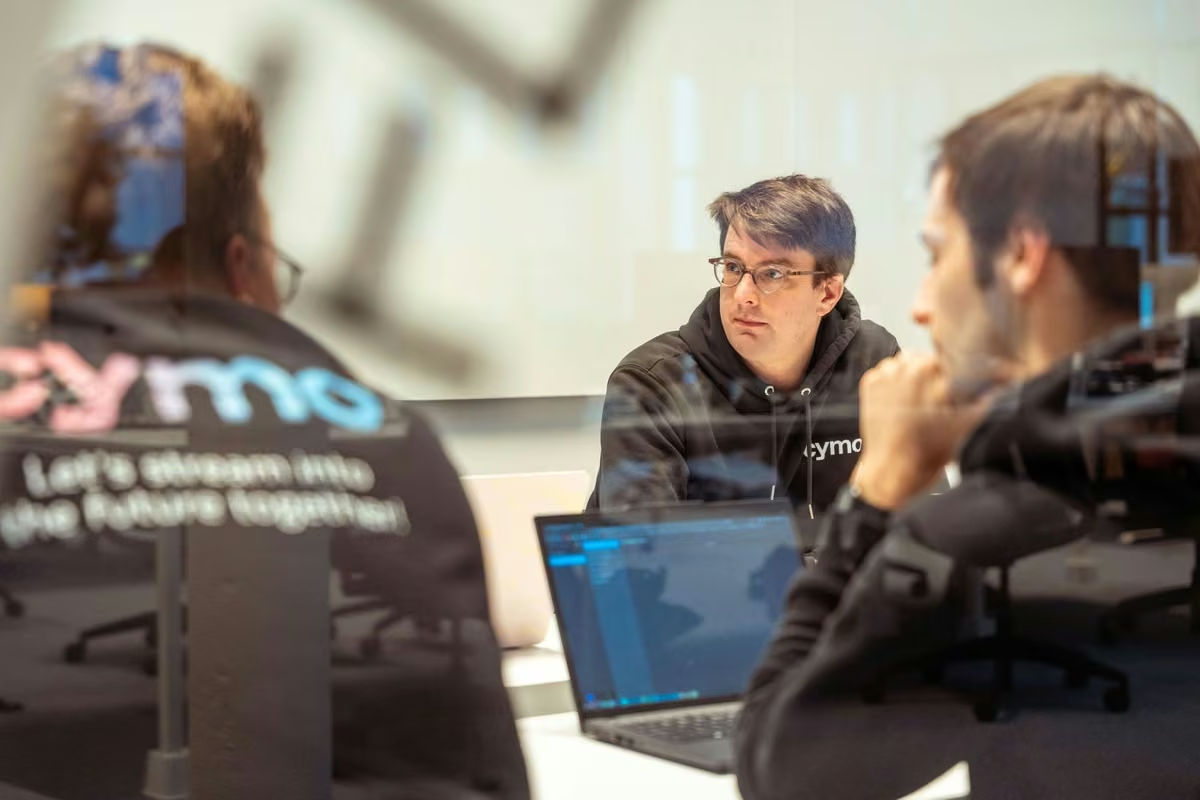
Cymo, from Ghent, specialises in event-driven architecture. Put simply: software that does not wait to be asked for data, but passes every event on the moment it happens. An order, a payment, a sensor reading: each is a small message on a stream, and every system that needs it reacts at once. Apache Kafka is the platform that carries such streams, and Cymo builds on it for large organisations.
We have known Cymo for a while: their logo sits among our earlier clients. When they came out with a product of their own, they asked us for the website.
Kannika: a backup for Kafka
Such a stream of events is valuable, and vulnerable: ransomware, a human error or a failure can damage it, and a business stands still. Cymo built an answer to that: Kannika, an application that backs up and restores Kafka data, in minutes rather than hours.
Cymo brought Kannika to market as a product, and a product needs a face of its own. The brief was clear: a product website, quickly, that tells the story to technical people and to those who decide, and that the team can maintain itself afterwards.
The design, with All Colours Of Communication
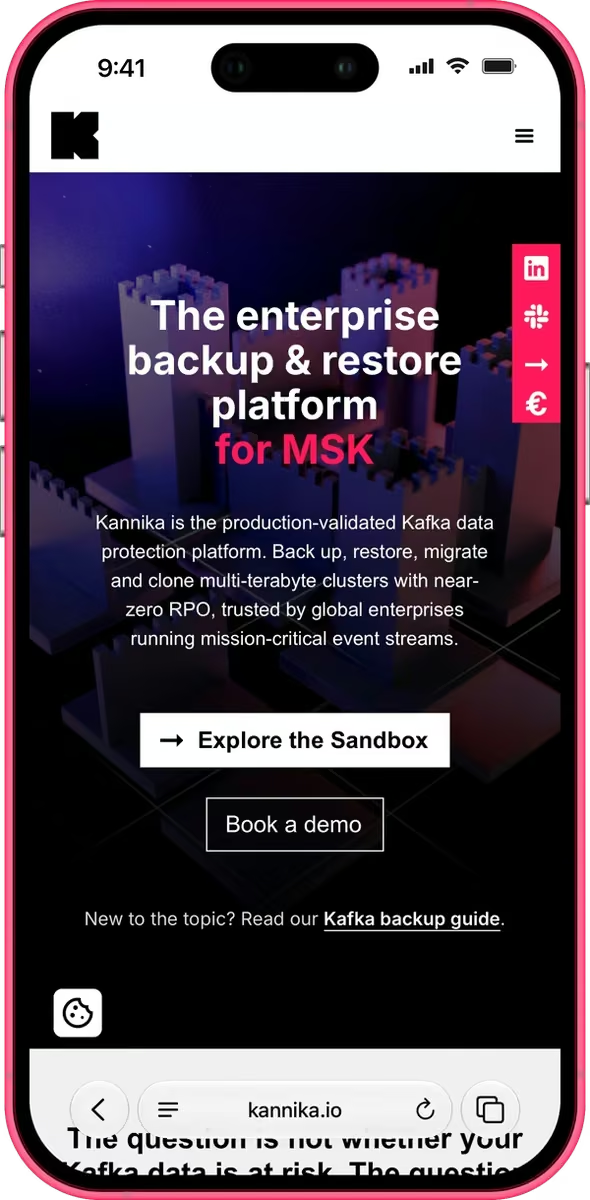
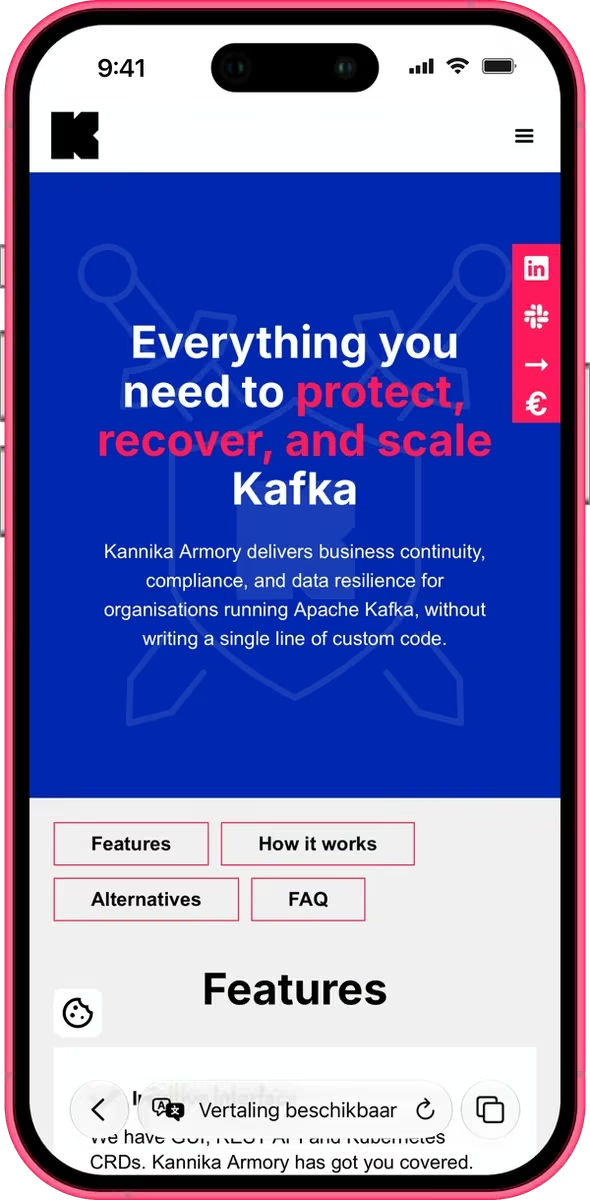
We made the designs in Figma, together with All Colours Of Communication, who helped shape Kannika's visual identity. A clean site in black, white and the brand's pink, with the castle as its image: protect, keep, restore.
Every page was fully worked out and approved before anything was built: the home page, the product, the solutions per situation, pricing and contact. So everyone knew beforehand what was coming.
Built in Webflow, so Wout edits it himself
Then we built the site in Webflow, with a CMS behind it. Wout and his team change text, pricing, solutions and articles themselves, without needing us for every change. A new page follows the design on its own.
The animations we made ourselves: the site moves, but stays light and fast. Cookiebot handles consent, Google Analytics measures what visitors do.
A free trial, straight from the site
Anyone who wants to try Kannika fills in a form on the site and gets a free trial licence. That form is connected to Kannika's API: the request creates the account and grants the trial, without anyone at Cymo having to do anything.
So the website is more than a business card: it is the start of every customer relationship, and every request lands where the team follows it up.
Found by search engines and by AI
A product site has to be found by anyone searching for a Kafka backup, and today also by anyone asking a chatbot. So we optimised the site fully for search engines and for AI: a clear structure, fast pages, and structured data on every page, so that Google and language models understand what Kannika is, what it does and for whom.
Articles on topics such as NIS2, ransomware and replication give search engines and AI something to refer to, and the visitor something to read.